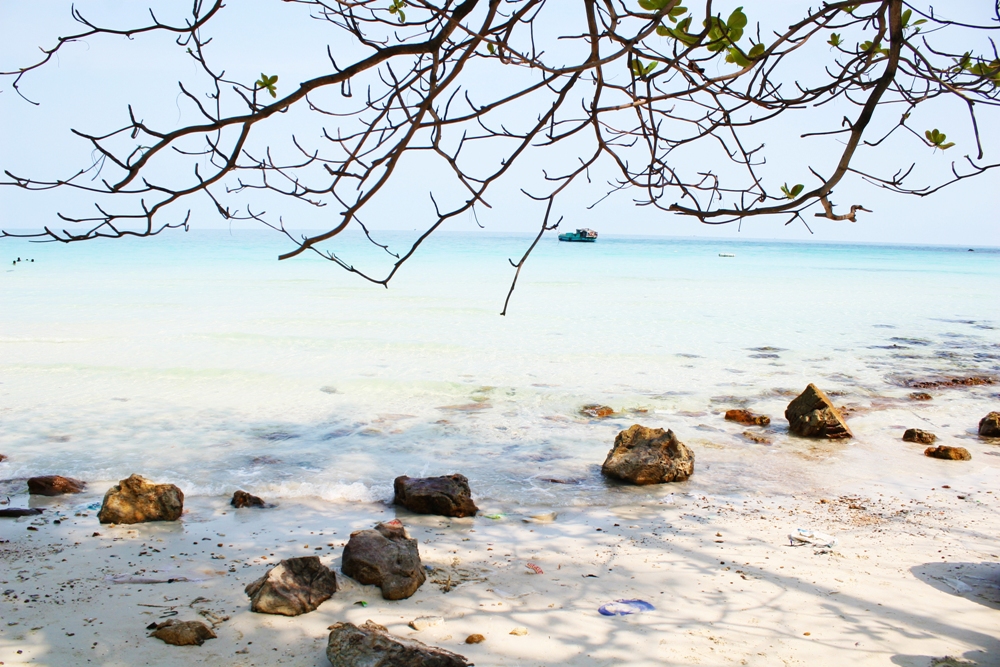
US travel site urges tourists to explore Vietnam’s two most beautiful beaches

Take a dip in these pristine holiday getaways that remain unspoilt.

The New York-based travel site Thrillist has included Cat Co 2 on the northern Cat Ba Island and Thom Beach on the southern island of Phu Quoc on its list of the best seaside getaways in Vietnam.
If you’re not by planning, there’s just enough time to add them to this year’s checklist before they are marred by over development.
Just 45km to the east of Hai Phong, Cat Ba boasts crystal-clear waters, jungles and ancient fishing villages. However, the island has managed to keep a relative low profile even though it is just to the south of the world-famous Ha Long Bay.

The travel site described Cat Co 2 as “the most relaxed of Cat Ba’s three beaches,” where travelers can take in a panoramic view of the amazing island surrounded by spectacular limestone mountains.
Thrillist also recommended holidaymakers to touch down on Thom Beach on the southern coast of Phu Quoc.
“Nestled in the forest that dominates this island, Thom Beach is too far off the beaten track for the coach tourists but brings in enough intrepid backpackers to sustain the local snack shacks and their surprisingly delicious homebrewed beer,” the site said.
The beach has avoided the tourist trap and retained its untouched beauty, so not many tourism services can be found there.
Take a trip down to the hidden pearl to experience the raw beauty, enjoy fresh seafood, and take a dive to look at the coral reef or simply swing in a hammock to listen to the sweet melody of the waves.
Like other Southeast Asian countries, Vietnam is struggling with overcrowding, coral damage and waste when it comes to beach tourism.
The country is already under threat from commercial tourism development, which has gradually crept into beach resorts, where shining beauty can easily be undermined by trash, crowds and construction.
Share:

5 Vietnamese island paradises to take your breath away

Vietnam’s largest island boasts idyllic beaches, romantic sunsets and evergreen forests.

1. Con Dao


A charming but mysterious girl on the southern coast
Just 230 kilometers ($143 miles) from Ho Chi Minh City, the 16-island archipelago in the southern province of Ba Ria-Vung Tau is touted as the perfect getaway for those wishing to immerse themselves in striking natural beauty surrounded by granite cliffs and crystal blue water.
Luckily, Con Dao has not been hit by human impacts and tourism fever, so travelers can leave their daily grind and tight schedules behind and explore the best of the stunning islands before it’s too late.
It was once branded “Hell on Earth” for the notorious jail it was home to during French colonial times, leaving mysterious and creepy stories behind.
In recent years, Con Dao has garnered international recognition for its charm and history.
Last year, New York-based Travel + Leisure included Con Dao on a list of the best secret islands on Earth, while the islands made the Lonely Planet‘s list of top 10 visit-worthy places in Asia in 2016.
Best time to visit: From May to October
What to try: Sit back and watch the day go by, explore the forest at Bamboo Lagoon or take a dive to see the amazing coral reefs.

2. Phu Quoc

Where heaven meets earth


Vietnam’s largest island boasts idyllic beaches, romantic sunsets and evergreen forests, making it the perfect holiday destination for travelers wishing to hide from the hustle and bustle of urban life.
Dubbed Vietnam’s Maldives, Phu Quoc Island off Vietnam’s southern province of Kien Giang is considered one of the most accessible and affordable getaways for Vietnamese and foreigners alike. It has an international airport, a 30-day visa-free policy and multiple friendly tourism services.
For those curious about daily life, don’t forget to drop by the fish sauce craft villages before heading to Ham Ninh fishing village, just 20 kilometers to the south of Duong Dong Town, the capital of Phu Quoc.
Best time to visit: Between October and May when the rains have left and the sun is shining down on crystal blue waters.
What to try: Seafood and Phu Quoc’s specialties such as raw herring salad, thick-strip noodle with mackerel, grilled shellfish muscles and grilled sea urchins.

3. Nam Du

Lose yourself at Vietnam’s second Ha Long Bay


Nam Du has gained its place on Vietnam’s beach tourism map over the past couple of years, so there’s no shortage of travel tips when you research your trip to the sparkling emerald.
Lying 83 kilometers from Kien Giang’s capital Rach Gia, Nam Du is the farthest outlying island of the province. The pristine island has 21 islets, 11 of which are inhabited, while the rest remain untouched.
Travel tips: To set foot on these islands, foreigners need to show a valid passport, visa and residency papers to be eligible for entry into “maritime boundary areas” issued by provincial-level public security departments,” in accordance with Vietnamese regulations.
Best time to visit: From December to March
What to try: Enjoy fresh seafood, take a dive to look at the coral reef or swing in a hammock to listen to the sweet melody of the waves.

4. Ly Son

Kingdom of garlic


Lying around 30 kilometers off the central province of Quang Ngai Province, Ly Son Island is hailed as a one-of-a-kind paradise thanks to its clear blue waters, white sands and vast garlic fields.
The 10-square-kilometer island is home to around 20,000 households who rely on growing garlic and fishing to make a living.
Once a sleepy and peaceful island, Ly Son has been undergoing a tourism boom in recent years, prompting authorities to issue a code of conduct in October last year.
The etiquette guide offers recommendations of dos and don’ts for local residents, travelers and tourism service providers in a bid to turn the beautiful island into a civilized and friendly tourist spot.
Best time to visit: From June to September or February to March when the garlic fields enter the harvest season
What to try: The seafood market and the breathtaking garlic fields
Share:

Should i have a trekking Sapa without a guide or not?

Sapa is the perfect destination for trek lover. There are the fantastic mountains, windy green rice fields, quaint town and colorful markets that attract tourists. Sapa trekking with a local guide is great, especially for a safe trip. However, trekking Sapa without a guide is also an ideal option.
1. Trekking Sapa without a guide – Where is Sapa?
Sapa is a small, mountainous town in Lao Cai province, located about 350 km northwest of Hanoi, close to the Chinese border. This land is famous for lots of tourist destinations like Hoang Lien Son mountain range, which includes Fansipan mount – the Roof of Indochina. It’s one of the reasons why tourists like trekking Sapa without a guide.
cat cat village
And this area is home of different ethnic tribal groups such as: the Hmonng, Dao, Tay, Giay, Xa Pho,… Every year Sapa welcomes a diverse of visitors, attracted by the trekking Sapa, highland tribes, iconic rice paddies and the diversity of forests. It’s no doubt that this land is blessed with natural beauty

2. Which route is the most appropriate?

There is no answer for this question because anywhere in Sapa can be your trail. And it also depends on what kind of trekking you would like to take: long or short.
If you want to take a short trekking Sapa without a guide, I recommend you to go to tribal villages. The most common places for sort trekking sapa are: Cat Cat village, Ta Van village, Ta Phin,… Those villages are really amazing. They are well preserved both the landscapes and tribal traditions. You can walk around the village and visit lots of stall where they sell their handicrafts or you also can join in some interesting workshops.
Moreover, if you prefer long and more adventurous trekking Sapa without a guide, there are also lots of trails for you. First of all, I want to mention the route on Hoang Lien Son mountains, which lead you to Fansipan mount. You can find it a little dangerous but if you have mountaineering experiences and you are venturesome enough, why don’t trek Hoang Lien Son mountains without a guide. You will be impressed by the landscape along the way. Another route that you can take is going through paddies fields. This route is safer for trekking sapa without a guide.

3. What things should you bring along when trekking Sapa without a guide?

preparation for trekking sapa
  • Water: You can’t survive without water. Take enough water. You should take a big bottle of water, about 1.5L. Believe you will finish all.
  • Food: If you take a trekking Sapa without guide, you should bring some food along. Packaged food is really convenient even thought it don’t taste well at all. Or you can take bring some snacks with you, and you can have lunch at local restaurants
  • Sun cream: No one wants to destroy the skin. It’s really sunny in Sapa except in the winter and you will take a trekking sapa without a guide all day so sun cream is essential.
  • Hat and sunglasses. Another sun protection objects that you need in every trip.
  • Camera: with a full – charged battery. You will be impressed by stunning views of Sapa. And you might want to take photos or record a video to share with your friends.
  • Map: obviously! You have a trekking Sapa without a guide, so a map is the crucial thing you need to have on your backpack. You should note the route on the map before to save time and to avoid missing some points.

4. Is it easy and safe to take a trekking Sapa without a guide?

Yes and yes, it’s really easy for Sapa trekking without guide. You can easily find great spots and bump into some tourists or local people at least once every hour. Therefore, we can ask for the directions if necessary. And you won’t be afraid of getting lost.
And is it safe for me to take a trekking Sapa without a guide? Once again the answer is yes. You have nothing to worry about. However, I definitely recommend keeping an eye on the time. You should go back to your hotel before dark because there are no lights outside the town. Other than being in the dark, there is no reason to feel unsafe at all.
Even there are a lot of local women and kids trying to sell you stuff, they are really friendly and do no harm to you. They follow you just because they want you to buy something from them.

5. Pros and cons of trekking Sapa without a guide

Pros

– It’s cheaper: Very clear and obvious. Without a guide, you only need spend money on the tickets for tourist attractions and food. Trekking Sapa with a guide usually charges you 30 USD/ day more or less.
– You can go wherever you want: Trekking Sapa without a guide is definitely gives you more freedom. You can design the route, destinations you want to go on your own. For me, it’s nice to make my own decisions and just go with the flow.
– You can find unique places: If you trek with a guide, they will lead you to the most common route that any tourists go. Then, it’s not intriguing anymore. And if you take a trekking Sapa without a guide, you can follow your own path and find some interesting places. Maybe, it’s not like Colombus discovered America, but you can feel satisfied and curious throughout the trip.

Cons

– You can get lost: Of course, there is always the possibility of getting lost when trekking Sapa without a guide. Maybe you’ve felt happy and then you realize that you are getting lost one minute later. And you are not very well oriented and don’t know how to get back. Stay calm and easy, it’s not that hard to find your way back. And as I said before, you can easily meet some tourists or local people, you can ask them for the directions and be back safe
– You might miss all the good stuff: A guide knows exactly where to take you, where there are the most impressive views for you. Therefore, in case of trekking Sapa without a guide you would miss some good stuff. But I think the unbeaten path is the most beautiful and the most interesting.
trekking sapa
– Without a guide you don’t get all the info: Absolutely, a guide can give you bunch of information about the history, culture and local stories that you can’t find them on the Internet of any book. When trekking Sapa without a guide you just walk around and say “wow this is so beautiful”. Maybe you don’t have lots of freedom with a guide but sometimes you really get interesting information.
I hope that with all above information, you can decide whether to have a trekking Sapa without a guide or not. And have good experiences in Sapa!
Share: